Starting Over, Stone by Stone
We all have to start over at some point. Some of what forces that on us is out of our control — a diagnosis, a storm, a door that closes without warning. Some of it we choose. But if we live long enough, the storm comes regardless. Finances shift. A friend betrays. A death occurs. Someone we love is gone, and the life we built around them has to be rebuilt around the shape of their absence.
I think about that a lot in terms of architecture — literally. How do you build something that can survive a disaster and time and still be standing, still be beautiful, centuries later?
Building From the Ground Up
During the Italian Renaissance, architects like Filippo Brunelleschi and Leon Battista Alberti weren't just designing palazzos to look impressive. They were solving a structural problem: how do you make a building that will outlast the people who commissioned it?
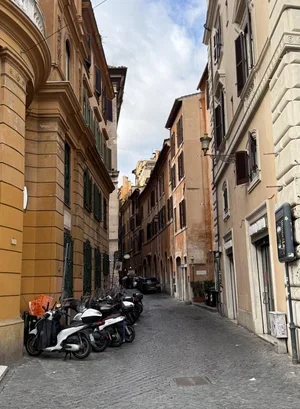
Their answer was to start heavy and refine as you rise. The base of a Renaissance palazzo was rusticated — rough-cut, deliberately unfinished-looking stone, laid thick enough to read as a fortress before it read as a home. That ground floor did the real work: it anchored everything above it and telegraphed strength to anyone walking by. Behind the cut stone facing, the walls themselves were often a sandwich construction — dressed ashlar on the outside, a core of rubble and lime mortar packed in behind it, doing the quiet, unglamorous job of holding the whole structure together.
Only once that foundation was established did the building allow itself to soften. Upper stories used lighter, smoother stone or lime plaster. Windows became more delicate. Ornament crept in. The proportions of every floor, every window, every room followed strict mathematical ratios, inherited from Roman precedent and shaped by a very Renaissance belief that beauty and reason were the same thing wearing different clothes. Horizontal string courses and cornices marked the transition between floors and, not incidentally, hid the practical stuff — the flat or low-pitched timber roofs — behind a clean, deliberate silhouette. Where a building needed to span open interior space, builders used stone or brick vaults, cast over wooden centering frames precise enough to hold the geometry until the mortar cured and the arch could carry its own weight.
None of that happened by accident, and none of it happened quickly. It happened in the correct order: foundation first, refinement second, ornament last. You cannot skip the rusticated base and go straight to the delicate cornice. The building will not stand.

What the Ballast Stones Left Behind
There's a version of this same idea sitting under the streets of Charleston, and it's a story that's often told a little too simply.
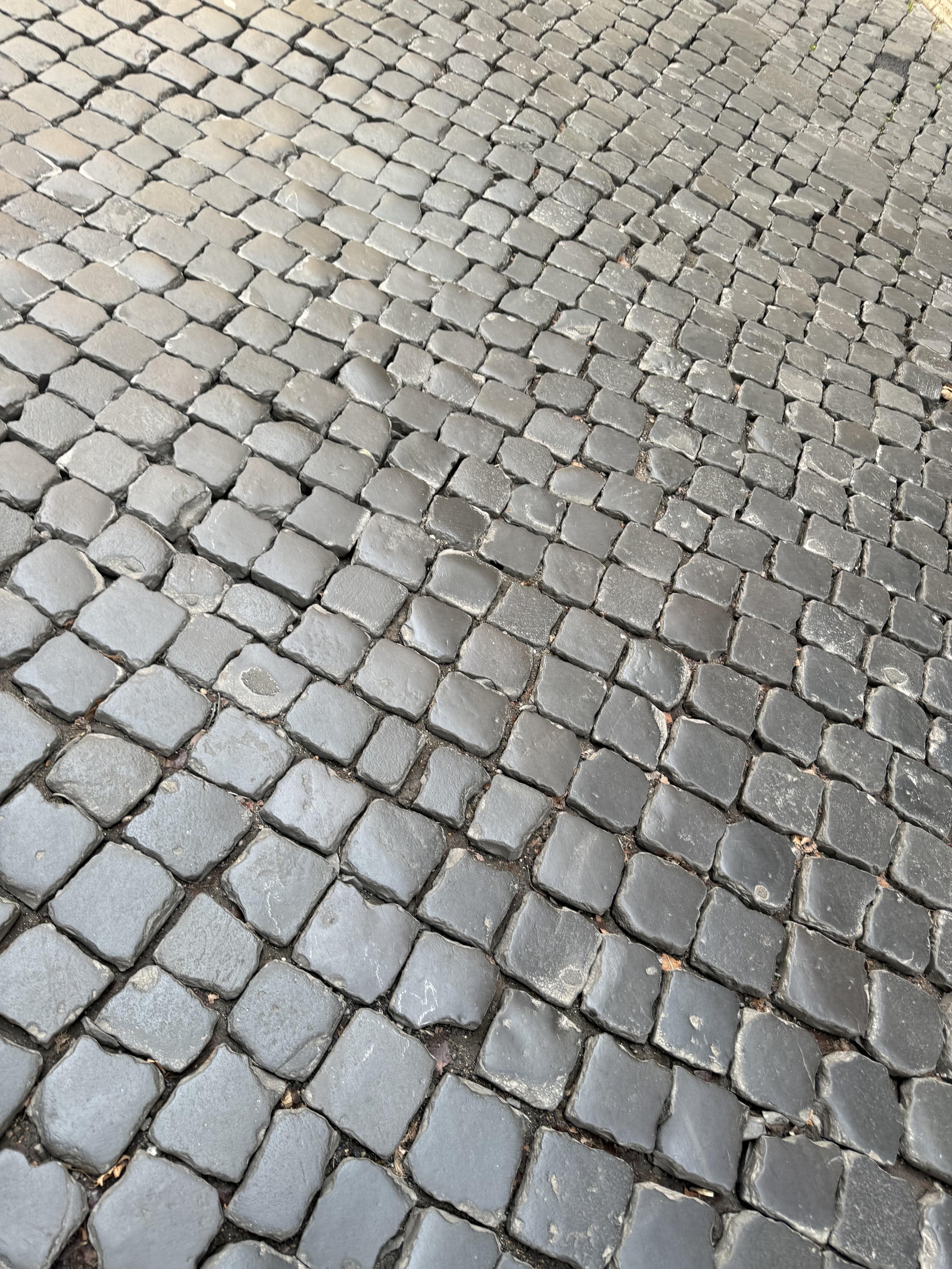
The popular version goes like this: ships crossing the Atlantic loaded their empty hulls with rock for ballast, unloaded that rock on the Charleston docks to make room for rice, indigo, and cotton, and the leftover stone became the city's cobblestone streets. It's a tidy story — trash becomes treasure — and it's not quite what happened.
The real history is more deliberate than that. Ships did carry ballast stone, and captains did unload it in Charleston. But colonial records show the town didn't simply let that stone pile up wherever a ship happened to dock. Law required captains to hand their ballast over to the city, where it was used with purpose — to shore up and protect the town's eastern waterfront and its fortifications. The stone wasn't scattered by accident. It was collected, sorted, and put to work reinforcing the part of the city most exposed to storms and tide.
I like that version better, honestly, because it's less about luck and more about intention. Nothing about that stone was wasted, and nothing about its placement was random. Someone decided that what had been ballast — dead weight, cargo of last resort, useful only for keeping a ship upright on a rough crossing — could become the thing that held a city's edge together against the water.

Rebuilding Choice by Choice
I've started over more times than I can count cleanly on one hand. I have lost loved ones, moved cities and ridden the highs and lows of a career. Each time, it's felt less like renovating and more like laying a new foundation course by course — deciding what counts as the rusticated base this time, what has to be load-bearing, and what can wait until later to be refined.
Starting over means editing. The friends who no longer fit the shape of who you're becoming. The experiences you keep because they hold weight, and the ones you let go because they were only ever decorative. The travel, the choices, the versions of a future you once assumed were fixed — all of it gets sorted the way ballast stone got sorted on a Charleston dock: not thrown away, but reassigned. Repurposed into whatever needs reinforcing now.
We can't relive the past. We can't go back and choose the smoother stone before the rough one, can't put the cornice up before the foundation is set. But we can rebuild — choice by choice, day by day, stone by stone — and if we're paying attention, we can build something sturdier than what the storm took.