Marseille, France: Where Ancient Harbor Meets Mediterranean Soul
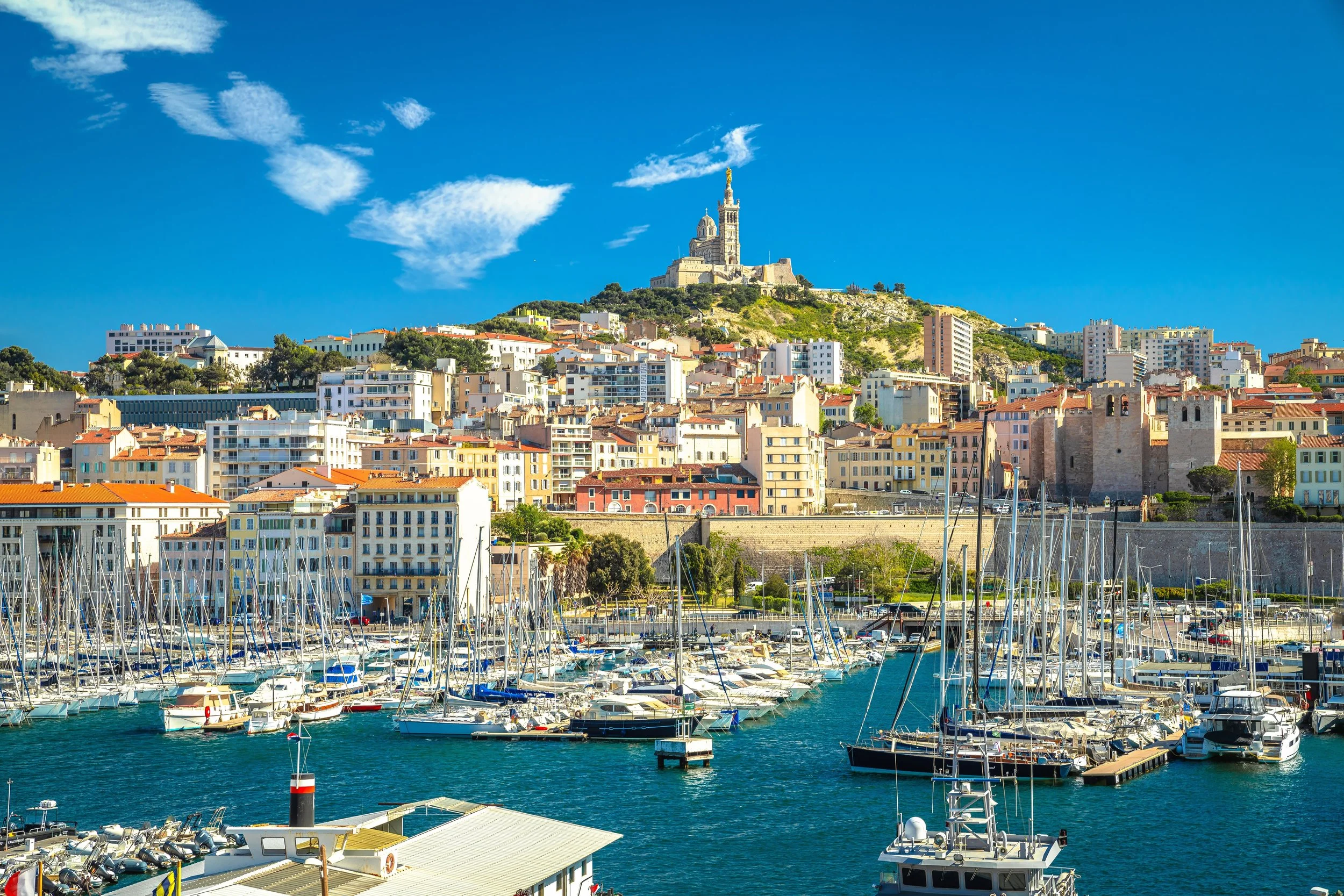
Marseille, France doesn't apologize for itself, to say the least. France's oldest city—founded by Greek sailors around 600 BCE—sprawls across sun-bleached hillsides above the Mediterranean, wearing its 2,600 years with a swagger that more polished French cities can't quite muster. This is a port town in its bones: gritty, multilayered, stubbornly authentic, and utterly unlike anywhere else in France.
While Paris perfects its postcard beauty and the Côte d'Azur chases glamour, Marseille does its own thing. The city's population reflects waves of immigration from across the Mediterranean and North Africa, creating a cultural richness you'll taste in every bowl of bouillabaisse, hear in the blend of French and Arabic on the streets, and see in neighborhoods where Baroque churches stand beside soap shops that have been crafting olive oil-based savon de Marseille for centuries.
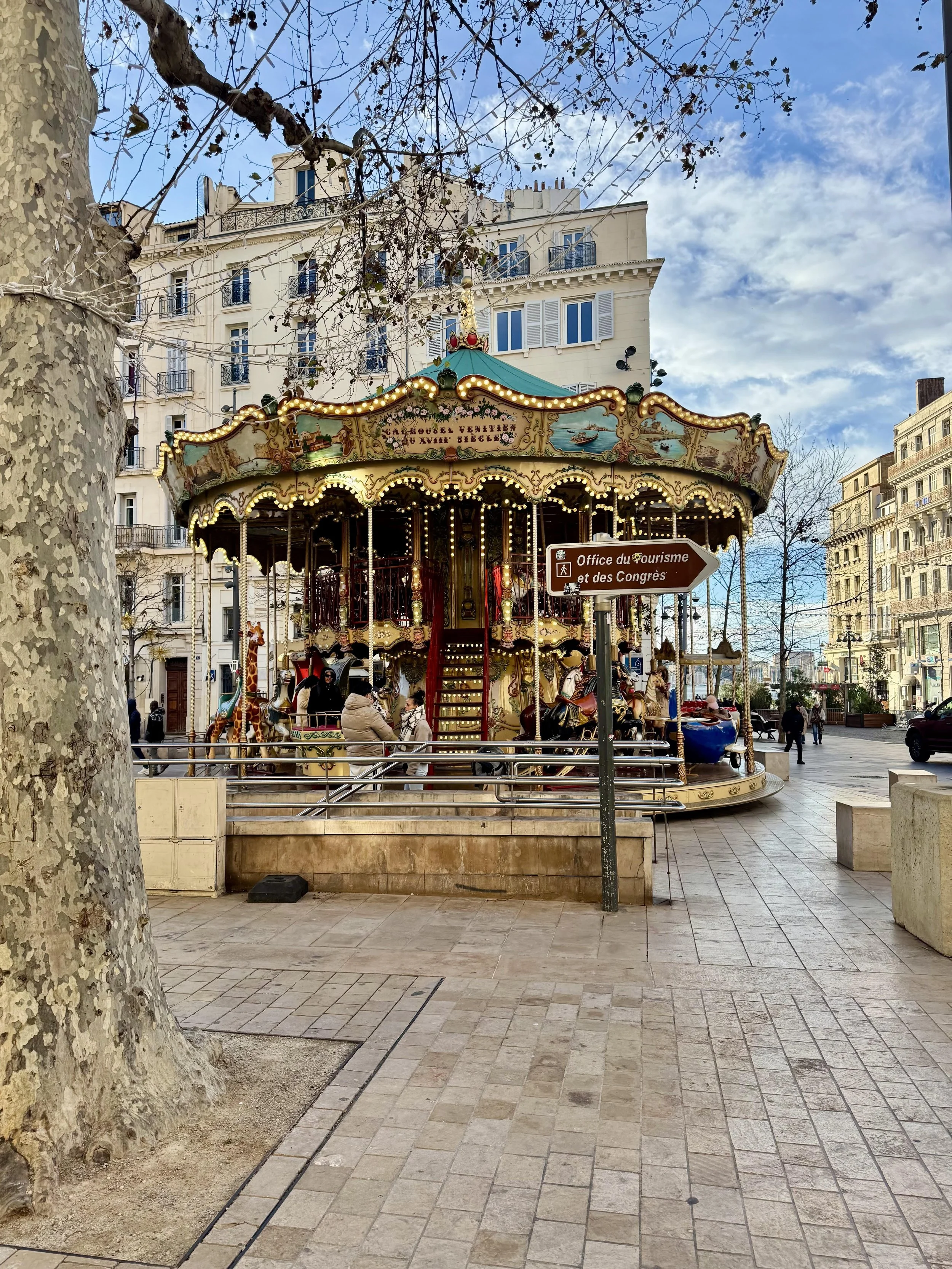
The Vieux-Port (Old Port) remains Marseille's beating heart, just as it has been since those Greek traders first dropped anchor. But venture beyond the waterfront and you'll discover a city of contrasts: the bohemian charm of Le Panier's narrow streets, the brutalist ambition of Le Corbusier's Cité Radieuse, vibrant street art covering entire buildings, and calanques—dramatic limestone cliffs and turquoise coves—that begin where the city ends.
Marseille won't seduce you immediately. It demands more than a passing glance. But for travelers willing to look beyond the surface, this Mediterranean maverick offers something increasingly rare: a major European city that still feels unvarnished, ungentrified, and genuinely alive.
The Waterfront Walk: Marseille's Maritime Soul
The best way to understand Marseille is to walk its waterfront, where the city has always faced outward toward the sea rather than inward toward France. Start early, when the fishmongers at the Vieux-Port's Quai des Belges are still setting up their morning catch—rascasse, rouget, and the rockfish that will become someone's bouillabaisse by evening. The air smells of brine and diesel, coffee and yesterday's pastis.
The Vieux-Port stretches before you like an amphitheater, pleasure boats and fishing vessels bobbing in water that shifts from jade to sapphire depending on the light. Fort Saint-Nicolas and Fort Saint-Jean stand sentinel at the harbor mouth, their 17th-century stone walls a reminder of when Louis XIV didn't quite trust this independent-minded port city. Now a modern footbridge connects Fort Saint-Jean to the MuCEM, where contemporary architecture meets medieval fortification in a way that somehow works.
Head south along the Quai de Rive Neuve and the character shifts. Restaurants spill onto the sidewalk, their chalkboard menus promising the day's catch. Street musicians stake out their corners. The pace here is unhurried—Marseillais take their coffee slowly, their conversations sprawling across multiple cigarettes and viewpoints. This isn't a waterfront designed for tourists passing through; it's where locals actually live their lives.
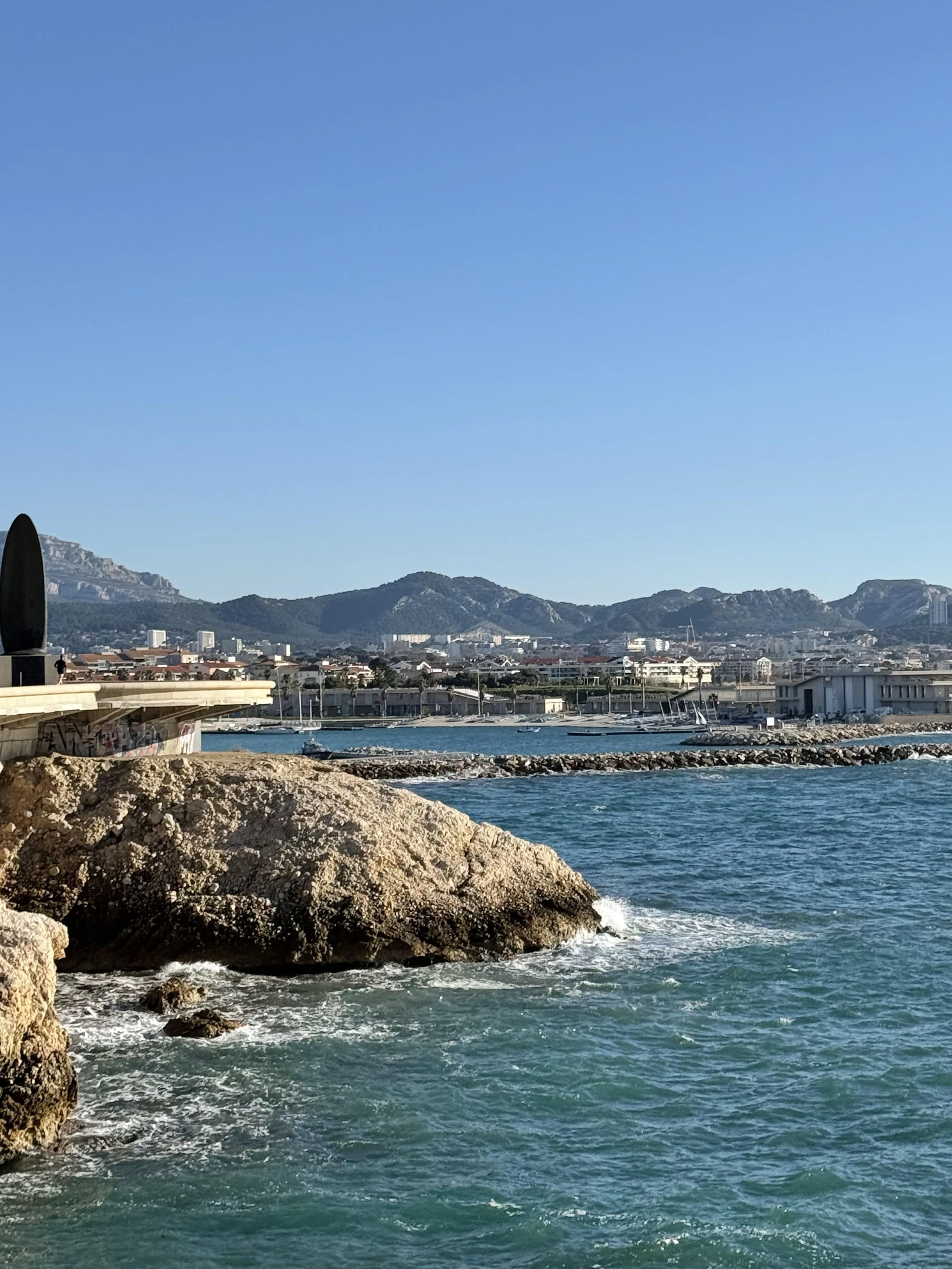
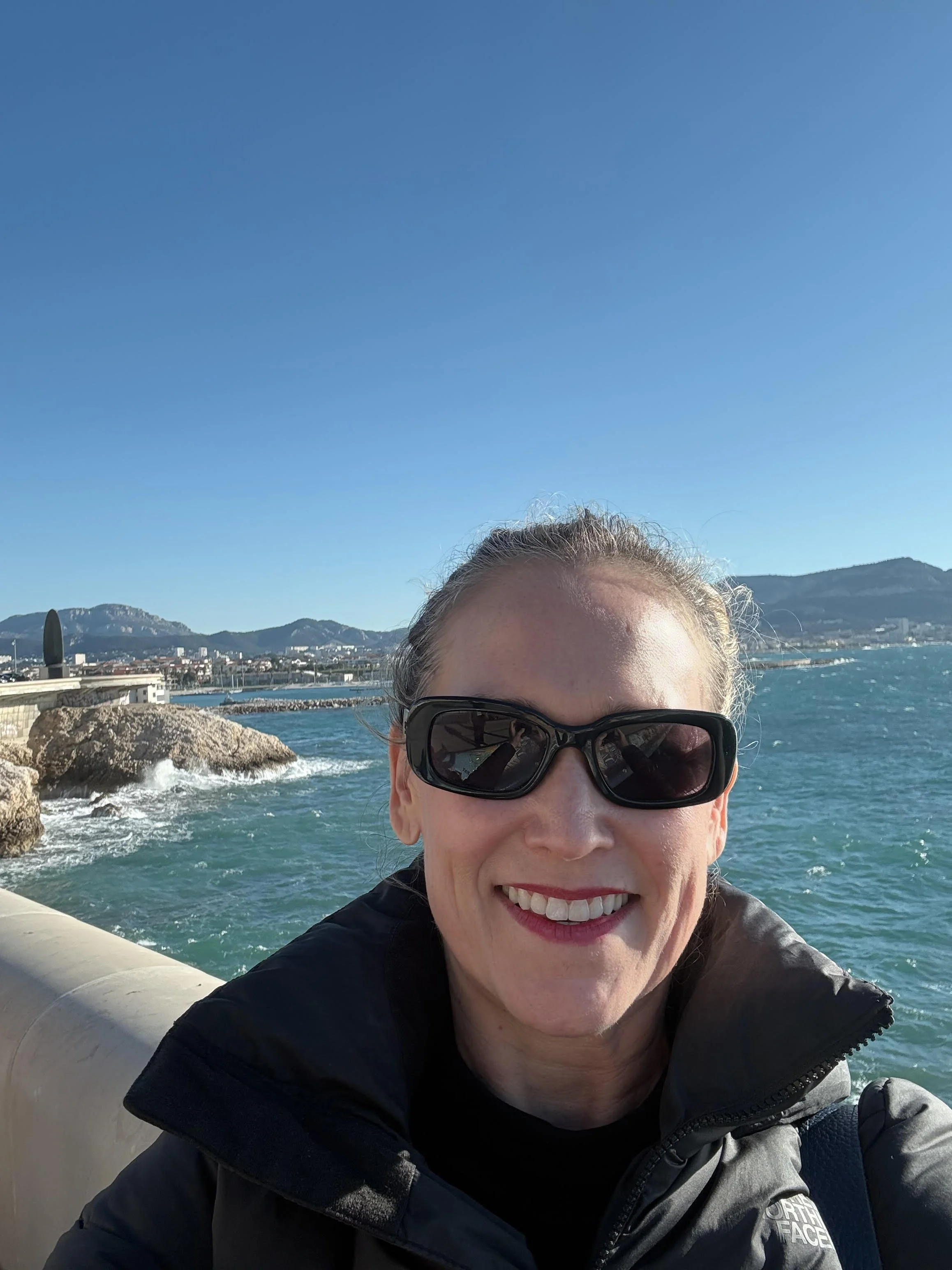
Continue toward the Pharo Gardens and the coastline opens up. The Corniche Kennedy curves along the Mediterranean for three miles, cliffs on one side, sea on the other. Locals jog, fish from the rocks, and dive into the water at small beaches tucked into the limestone. The road winds past the Vallon des Auffes, a tiny fishing village that somehow survived being swallowed by the city—wooden fishing boats called pointus crowd a miniature harbor beneath a viaduct, looking exactly as they might have a century ago.
The real revelation comes as you approach the Prado beaches. The Mediterranean stretches to an impossible horizon, and on clear days you can see the Château d'If sitting on its island, where Dumas imprisoned the Count of Monte Cristo. The water gleams, wind surfers lean into the mistral, and Marseille's famous fierce sunlight makes everything sharp-edged and vivid.
Walking Marseille's waterfront, you trace the outline of a city that has always belonged more to the sea than to France—a place where departures and arrivals, the ancient and the immediate, have merged for nearly three millennia.
Palais Longchamp: Marseille's Monument to Water
In a city defined by the sea, Marseille's most grandiose monument celebrates not salt water, but fresh. The Palais Longchamp stands as an extravagant 19th-century tribute to the engineering feat that finally quenched this sun-baked port's thirst—the Canal de Marseille, which brought water from the Durance River some 50 miles away.
Built between 1862 and 1869, the palace is less a building than a theatrical performance in stone. Its centerpiece is a triumphal arch flanked by sweeping colonnades that curve outward like welcoming arms. But what makes Longchamp unforgettable is the cascade: water tumbles down a monumental fountain in multiple tiers, framed by sculptural allegories of the Durance and Garonne rivers. Bulls and stags emerge from the stonework, water spills from urns held by classical figures, and the whole composition celebrates the life-giving force that transformed Marseille's fortunes.
The architect Henri-Jacques Espérandieu designed Longchamp in the ornate Second Empire style—think Napoleon III excess rather than classical restraint. It's unapologetically grand, the kind of civic monument that declares a city's ambitions. The symmetrical wings house two museums: the Museum of Fine Arts on one side and the Natural History Museum on the other, both worth exploring for their collections and their Belle Époque interiors.
But the real pleasure of Palais Longchamp is simply being there. The surrounding park offers shade beneath ancient trees, rose gardens, and enough space for Marseillais families to picnic, jog, and let children chase pigeons around the fountain. On summer evenings, the cascade catches the lowering sun, turning golden as water continues its perpetual descent.
For a city that spent centuries struggling with drought and relying on cisterns and wells, this monument makes perfect sense. Marseille didn't build a cathedral to water—it built a palace, complete with flowing fountains that run year-round, a permanent reminder that even the most essential things are worth celebrating with beauty and grandeur.
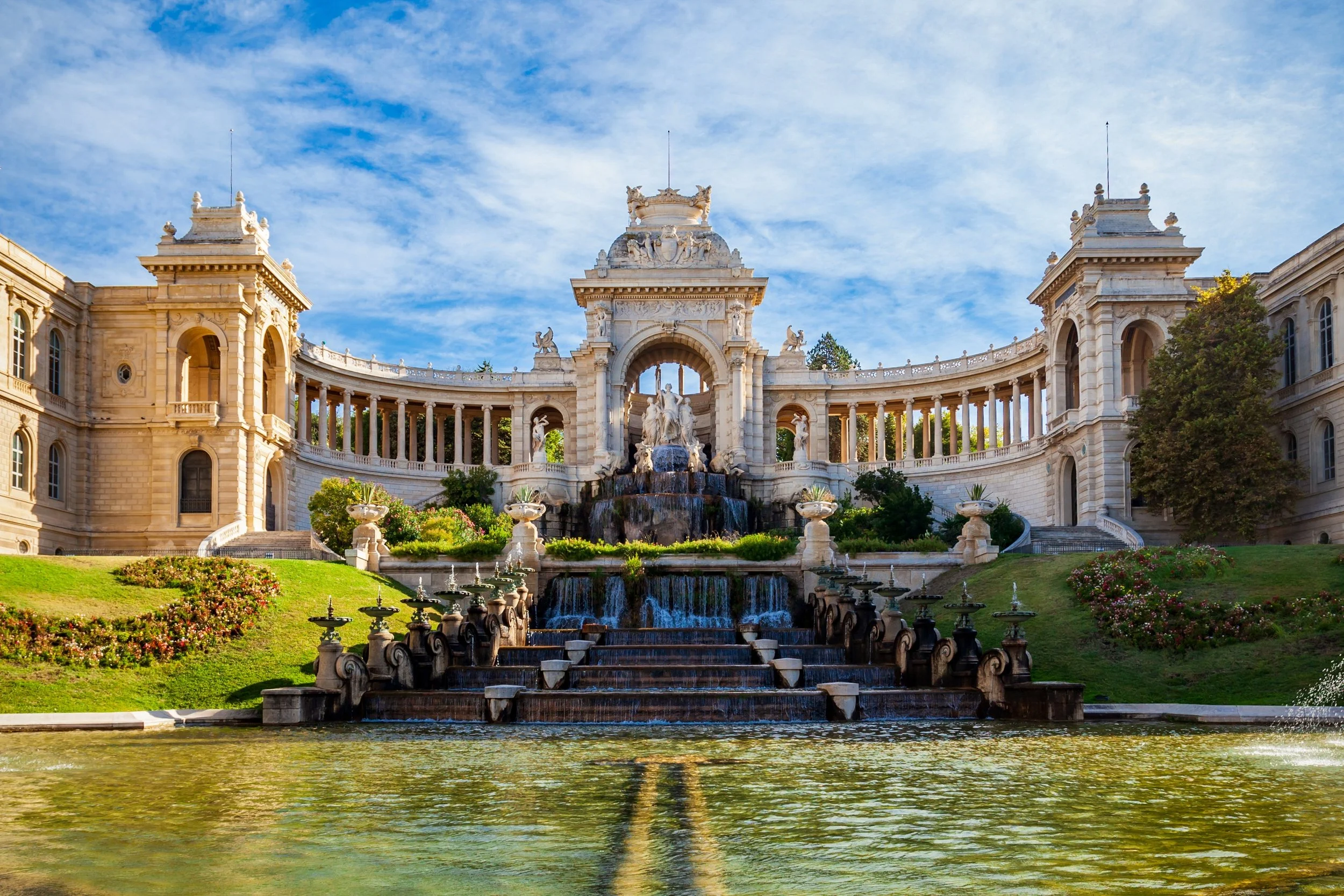
The Palais Longchamp stands as an extravagant 19th-century tribute to the engineering feat that finally quenched this sun-baked port's thirst—the Canal de Marseille, which brought water from the Durance River some 50 miles away.
Marseille doesn't let go easily. Long after you've left, you'll find yourself craving the particular slant of Mediterranean light on old stone, the anarchic energy of the Vieux-Port at midday, the taste of bouillabaisse eaten within sight of the boats that caught its ingredients. This isn't a city that offers tidy conclusions or neat impressions—it's too sprawling, too contradictory, too alive for that. Instead, Marseille lodges itself somewhere between your ribs: a sun-soaked memory of a place that refuses to be anything other than exactly what it is. Whether you spent three days or three weeks here, you'll understand what the locals have always known—that this rough-edged, beautiful, infuriating, magnificent city doesn't need your approval. It just needs you to pay attention. And once you have, once Marseille has worked its way into your bones, you'll find yourself planning your return before you've even reached the airport. The mistral wind will see to that.